
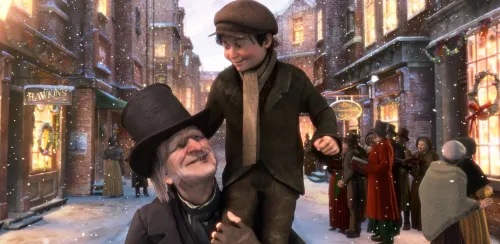
The Ebenezer Syndrome?
The public was first introduced to Mr. Ebenezer Scrooge in late December of 1843 when Charles Dickens published his celebrated novella, A Christmas Carol, in London. The publication was immediately marked as an absolute success and received critical acclaim. One of the main concepts that readers—and, later on, viewers of different versions and adaptations of the novella—focused on was Ebenezer Scrooge’s character. His sudden transition from being a misanthropic, cynical, pessimistic, and materialistic man to a kind-hearted, social, generous person allowed for more social and filmic interest.
Scrooge on Screen
Since 1901, filmmakers have been obsessed with capturing Scrooge’s gloomy character on screen. Here are some notable adaptations:
- 1901: Scrooge (Or Marley’s Ghost)
- 1910: A Christmas Carol
- 1935: Scrooge
- 1938: A Christmas Carol
- 1949: The Christmas Carol
- 1951: Scrooge
- 1954: A Christmas Carol
- 1956: The Stingiest Man in Town
- 1964: Carol for Another Christmas
- 1970: Scrooge
- 1975: The Passions of Carol
- 1984: A Christmas Carol
- 1998: Ebenezer
- 2000, 2009, 2012: A Christmas Carol
Understanding the Fascination
What has been the fascination with Ebenezer Scrooge’s character? His personality traits can be explained in several ways:
Sigmund Freud’s psychoanalytic approach would suggest projection. Scrooge was projecting his own disappointment, misery, and dejection on others—purposely reminding everyone that Christmas should not be joyous. They had more important things to distress over: finances. Freud might also argue Scrooge displayed sadistic tendencies through his extreme pessimism, hostility, and antisocial behavior.
According to Freud, Scrooge’s overnight transformation came when his unconscious motives became conscious upon confronting mortality. The third ghost—the Ghost of Christmas Yet to Come—forced him to face the grim truth of death. Tracing his name on a future tombstone awakened in him a full awareness of life and loss.
Abraham Maslow’s humanistic theory offers another layer. Maslow might argue that Scrooge lacked love and belonging. His sudden awakening was the result of fulfilling the psychological need for social connection. Like many Christmas films, A Christmas Carol emphasizes the power of social bonds to foster joy and purpose.
What Makes a Merry Christmas?
In 2002, Kasser and Sheldon published a study in the Journal of Happiness Studies titled “What Makes for a Merry Christmas.” They found that most people engage in the following during the holiday season:
- Religious observance
- Upholding family traditions
- Gift giving and receiving
- Helping the less fortunate
- Enjoying food and festivities
Their conclusion? Materialism negatively impacts psychological well-being, while activities that promote social connection boost satisfaction. So why do we return to classic Christmas movies every year? Because they reaffirm the comfort of connection and community that we crave.
The Meaning of “Ebenezer”
Have you ever wondered about the meaning of Ebenezer?
In the biblical book of 1 Samuel, the Israelites were under threat from the Philistines. The prophet Samuel cried out to God, and God answered by sending thunder to protect them. Afterward:
“Samuel took a stone and set it up between Mizpah and Shen. He named it Ebenezer, saying, ‘Thus far the Lord has helped us.’” – 1 Samuel 7:12
The Ebenezer stone is known as “the stone of help.” It symbolizes someone who offers bountiful help to others. Knowing the meaning of Scrooge’s name doesn’t just demystify Dickens’ story—it predicts the inevitable redemption arc.
Rest in peace, Freud and Maslow; perhaps no one should object to having a case of “The Ebenezer Syndrome” this Christmas. After all, it has nothing to do with Scrooge’s original miserly ways—but everything to do with the help, hope, and human connection that follows.