
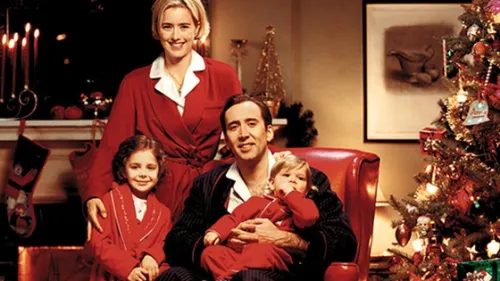
A Cozy Christmas Cage
By Tina Marie Canalita, academic scholar and contributing author
With the dulcet tones of Bing’s “White Christmas” in the background, it’s hard not to feel the holiday spirit tugging at your heartstrings. Even the Grinch can’t deny Mr. Crosby! For me, the song evokes beloved childhood memories of snowy Christmases past, and I yearn for those sweet, uncomplicated years. But that is the point, right? It keeps us coming back for more — to have ourselves a Cozy Christmas Cage!
Hollywood contributes to my nostalgic traditions through a plethora of Yuletide movies. And while I prefer the classics, I do have a few contemporary favorites as well. The Family Man (2000) starring Nicolas Cage is one of them. For the cynics, please suspend your disbelief for a little while — this plot offers a subjective spin on Frank Capra’s iconic movie It’s A Wonderful Life.
The Family Man gives us a reverse perspective. Instead of George Bailey — the financially burdened family man who wishes he was never born — we have Cage’s character, Jack Campbell, a single, successful, and wealthy man. He owns all the material trappings of success (including women), but he’s unmistakably lonely.
Even after receiving a message from Kate, his old college flame, Jack refuses to admit that anything is missing from his seemingly perfect life. With a nod to Robert Frost’s poem The Road Not Taken, Jack brushes off his regrets, stating: I took the road less traveled.
This foreshadows the upcoming events.
After a strange encounter with a gun-toting would-be robber (his version of Clarence the angel), Jack is thrust into an alternate reality — a glimpse of the life he could have had if he had chosen love over ambition.
During this “what if?” journey, Jack initially rejects his new suburban, blue-collar life and relentlessly searches for a way to escape it. Yet it’s in these tense, comical, and heartfelt moments that Cage delivers a memorable performance. With his soulful eyes and natural flair, Cage transitions effortlessly between the roles of a comical everyman and a high-powered Wall Street shark.
Jack’s epiphany doesn’t happen until he’s about to lose this imaginary life (e.g. we don’t know what we got until it’s gone). He finally realizes that he made a mistake when he chose career and money over love. And yes, he gets the proverbial second chance to change his fate. Back to reality, and cue the dramatic music as Jack races to stop Kate from leaving. And they all lived happily ever after.
So why do we return to these predictable and overly saccharine movies (a.k.a. modern fairytales)? Well, no matter how improbable the story might be, we keep coming back because it resonates with us on a personal level. In the midst of our mind-numbingly commercialized nonstop holiday shopping marathon, we earnestly want to feel something other than an empty bank account.